Alaska Real Estate Questions Answered
Alaska Real Estate Q&A · 2026
From where to invest to what not to say to your appraiser — here are the most common Alaska real estate questions, answered honestly and with local context.
Recommended Areas for
Real Estate Investment in Alaska
Alaska was ranked the #11 hottest real estate market in the United States entering 2026 — and the investment case varies significantly by community. For a deeper breakdown of how these areas compare side by side, our Alaska investment areas and market trends guide covers the full picture. Here's where the strongest fundamentals are right now:
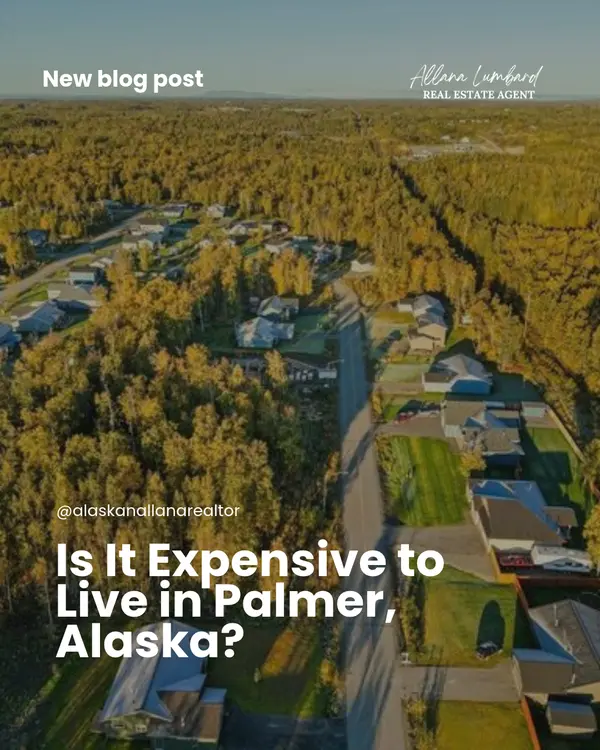
Palmer is up 9.1% year-over-year — the strongest appreciation in the region. Wasilla is Alaska's fastest-growing community. Over 60% of all new home starts in Alaska happen in the Mat-Su Borough. Population growth is structural, not speculative, driven by Anchorage out-migration and remote worker relocation. See how the Valley compares to Anchorage for long-term investment fundamentals.
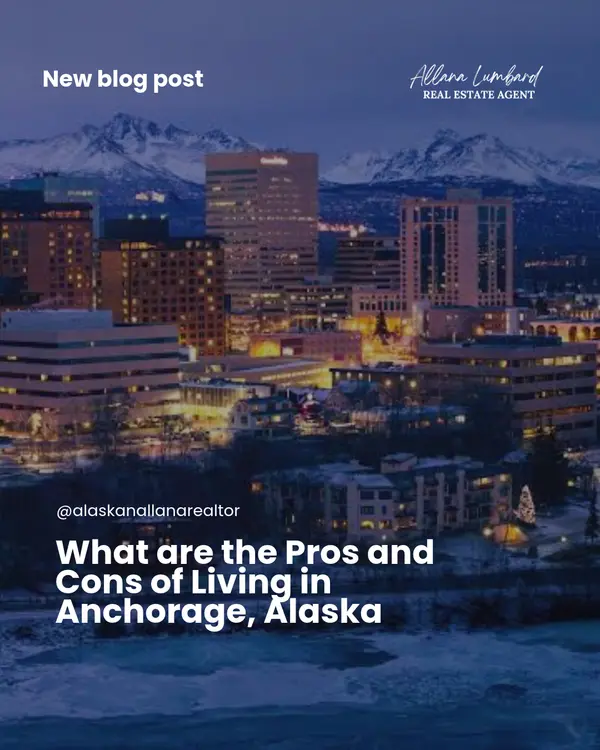
Alaska's economic and population center. JBER — with 28,500+ personnel — creates year-round housing demand that doesn't evaporate in down cycles the way discretionary markets do. Inventory at 1.1 months of supply keeps upward pressure on prices. Condos offer lower entry points with strong rental demand. View the live Anchorage market snapshot.
Part of the Municipality of Anchorage but with more space per dollar. JBER proximity drives sustained VA loan buyer demand, which creates reliable exit liquidity for investors. Mountain views, trail access, and newer construction at competitive prices. Consistent appreciation with a deeply loyal buyer pool.
Homer, Kenai, and Soldotna offer a different investment thesis — recreational access, outdoor tourism, and seasonal rental demand from fishing and wildlife visitors. Homer's art scene and coastal character attract out-of-state buyers. Lower price points than Anchorage with different risk/reward dynamics.
The Alaska investor's key advantage: No state income tax, no statewide real estate transfer tax, and the annual PFD (~$1,000/person) all support local purchasing power. Military rotation demand from JBER provides a structural floor under Anchorage and Eagle River rental markets that simply doesn't exist in most other states.
Typical Closing Costs for
Buying a Home in Alaska
Alaska buyers typically pay 2%–5% of the purchase price in closing costs — separate from and in addition to the down payment. On a $400,000 home, that's $8,000–$20,000. For the complete line-by-line breakdown, read our dedicated guide on Alaska closing costs with no surprises. Here's the summary:
| Cost Item | Typical Amount | Notes |
|---|---|---|
| Loan origination fee | $0–$3,800 | Varies widely — shop lenders |
| Underwriting & processing | $400–$900 | Lender admin fee |
| Home appraisal | $500–$800 | Required by lender |
| Home inspection | $450–$650 | Never skip in Alaska |
| Lender's title insurance | $500–$1,000 | Protects lender |
| Owner's title insurance | $700–$1,200 | Highly recommended |
| Settlement / escrow fee | $500–$1,200 | Often split with seller |
| Prepaid homeowner's insurance | $1,200–$2,400 | First year paid at closing |
| Earthquake insurance | $600–$1,800/yr | Required by most AK lenders |
| Property tax escrow deposit | $1,000–$3,000 | 2–3 months collected upfront |
| Recording fees | $50–$200 | Borough recording charge |
| State transfer tax | $0 | Alaska has none — advantage! |
| Estimated total (on $400K home) | $8,000–$16,000 | Excl. down payment |
Alaska's biggest closing cost advantage: no statewide real estate transfer tax. In states like Washington, sellers pay 1.1–3% on the sale price — in Alaska, that fee doesn't exist. Use our mortgage calculator to estimate your full monthly payment and upfront costs.
What Devalues a House
the Most in Alaska?
Alaska's climate creates specific home value detractors that don't exist — or don't matter as much — in most other states. Whether you're a seller preparing to list or a buyer evaluating what to offer, understanding these factors is critical. Our Alaska home inspection guide covers what inspectors flag most and how sellers can address issues before they hit the negotiating table.
- 01
High impact
Aging or failed heating system
Alaska buyers scrutinize heating more than almost anything else. An aging oil boiler, unserviced furnace, or outdated heating type signals ongoing cost and risk. Buyers factor estimated annual heating costs into their offers — a home that costs $400/month to heat versus $200/month is not the same home in Alaska.
- 02
High impact
Roof damage or near end-of-life
Heavy snow loads, ice damming, and freeze-thaw cycling degrade Alaska roofs faster than most climates. A roof that needs replacement ($10,000–$22,000) is one of the most common negotiation triggers — and one of the most predictable value deductions.
- 03
Medium–high
Poor insulation and failed window seals
Windows that fog between the panes have failed seals — a very common Alaska finding. Poor attic insulation means higher heating bills. Buyers increasingly calculate heating cost into their monthly budget and discount accordingly for homes with visible energy efficiency issues.
- 04
Very high
Foundation issues from freeze-thaw cycles
Decades of ground movement, frost heave, and seasonal expansion can crack foundations, cause uneven floors, and stick doors. Structural issues are the highest-impact deduction category — and the hardest to negotiate around because they trigger lender concerns as well as buyer ones.
- 05
High impact
Moisture intrusion and crawlspace issues
Snowmelt, drainage problems, and vapor barrier failures lead to moisture in crawlspaces. Mold indicators or active moisture issues can require $5,000–$20,000 in remediation and are flagged on every inspection report as a health and safety concern.
- 06
Moderate
Deferred cosmetic maintenance and dated interiors
Outdated kitchens and bathrooms, worn flooring, and peeling paint don't devalue a home as dramatically as structural issues — but they create a "mental discount" in buyers' minds. A long list of cosmetic deferred maintenance signals neglect even when the bones are sound.
Seller tip: The best time to address these issues is before you list — not after the inspection report arrives under closing pressure. If you're planning to sell and want to know what your home is worth today and what to fix first, get a free home evaluation as your starting point.
What Not to Say
to an Appraiser
The home appraisal is an independent process — and that independence is legally protected. An appraiser's job is to determine the fair market value of your property based on data, not to hit a number that makes your deal work. Attempting to influence that process — even unintentionally — can create problems. Here's what to avoid saying, and what actually helps:
- —"We need the value to come in at $X to close." Pressuring an appraiser to hit a number is unethical and can flag your transaction.
- —"The other house down the street sold for $Y." Let the appraiser pull their own comps — pointing to selective data can backfire.
- —Negative comments about the neighborhood, neighbors, or local market. Anything that undermines the property's desirability influences perception downward.
- —"This house is worth at least $X." Stating a minimum expectation puts the appraiser in an uncomfortable position and signals potential pressure.
- —"We already have the buyers lined up at this price." Future contracts don't validate current market value.
- →Provide a written list of all improvements made — with dates, contractors, and costs. Let the data speak for itself.
- →Point out anything that might not be obvious — recent roof, new furnace, upgraded insulation — factually and without advocacy.
- →Ensure all areas are accessible — attic, crawlspace, mechanical room. An inspector who can't access something flags it.
- →Be available to answer factual questions about the property's history, permits, and any work completed.
- →Clean and presentable — a clean home doesn't change the appraisal methodology, but presentation signals care.
In Alaska, appraisers pay particular attention to heating system type and age, insulation quality, and roof condition — the three factors that most directly affect a home's long-term operating costs and structural integrity in this climate. Having documentation for any recent work on these systems is your most powerful tool in the appraisal process. If you're listing your home and want to understand how to position it for the best outcome, start your selling journey here.
Typical Costs Associated With
Buying Property in Alaska
Beyond closing costs, buying a home in Alaska comes with an Alaska-specific set of ongoing ownership costs that many first-time buyers underestimate. Before you calculate affordability, build your real total monthly housing cost — not just the mortgage payment. This is one of the most common mistakes Alaska first-time buyers make.
| Cost Category | Typical Monthly Amount | Alaska-Specific Note |
|---|---|---|
| Mortgage principal & interest | $2,100–$2,600 | Based on $380K–$420K loan at 6.23% |
| Property taxes | $330–$440/mo | Mat-Su ~$330; Anchorage ~$440 on $400K home |
| Homeowner's insurance | $100–$200/mo | Shop at least 3 quotes |
| Earthquake insurance | $50–$150/mo | Required by most AK lenders |
| Heating costs | $150–$400/mo | Varies dramatically by system type & insulation |
| Maintenance reserve | $300–$600/mo | Budget 1–2% of home value per year |
| HOA fees (if applicable) | $200–$500/mo | Condos and some subdivisions only |
| Well & septic maintenance (Mat-Su) | $30–$80/mo | Annual testing, pumping reserve |
| Estimated total monthly ownership cost | $3,000–$4,800/mo | Varies by property and location |
Alaska buyers also need to budget for upfront costs beyond closing: earthquake insurance deductible (typically $2,500–$10,000), a home warranty if buying an older home ($400–$700/yr), and a generator ($800–$3,000) for power outages — particularly relevant for rural properties in the Mat-Su Valley. Use our mortgage calculator to model your specific monthly payment, then add these Alaska-specific line items for an honest affordability picture.
The Alaska buyer advantage on costs: No state income tax means more of your paycheck is available for housing costs. The annual PFD (~$1,000/person) can be directed toward a maintenance reserve or savings cushion. And for buyers choosing the Mat-Su Valley over Anchorage, the property tax difference alone saves $77–$120/month. Our guide on buying vs. renting in Alaska breaks down exactly how ownership costs compare to renting.
Current Real Estate Market
Trends in Alaska (2026)
Alaska entered 2026 as the #11 hottest real estate market in the United States (Construction Coverage / Redfin). While national markets have shown signs of softening, Alaska's market is insulated by structural forces — limited buildable land, JBER military demand, and an in-migration pattern from Anchorage to the Valley — that don't reverse quickly. For the most current weekly market data, our Alaska market update blog tracks what the latest rate movements mean for buyers and sellers right now.
The key trends shaping Southcentral Alaska's market in spring/summer 2026:
Rates improved significantly year-over-year. The 30-year fixed dropped to 6.23% on April 23 — down from 6.83% a year ago — its lowest point in three spring homebuying seasons. This has improved buyer purchasing power by roughly 10% compared to spring 2025.
Inventory remains constrained. Anchorage has just 1.1 months of supply — far below the 5–6 months that defines a balanced market. The Mat-Su Valley has more new construction, but demand is absorbing it. Sellers remain in a strong position across Southcentral Alaska.
The Mat-Su Valley continues to outperform. Palmer's 9.1% year-over-year appreciation leads the region. The Valley grew by 1,696 residents in 2025 alone — Alaska's fastest-growing area. New construction is concentrated here, accounting for more than 60% of all Alaska home starts.
Summer 2026 is shaping up as a strong seller season. JBER military PCS rotation peaks May–August. Out-of-state buyers from Seattle, LA, and California are most active June–August. If you're considering selling, our summer real estate timing guide explains exactly why now is a historically strong window.
How to Find Alaska Real Estate
Agents With Good Reviews
Finding the right real estate agent in Alaska isn't just about reviews — it's about finding someone who genuinely knows your target market, has real recent transaction experience in it, and communicates in a way that actually helps you make good decisions. Here's how to evaluate any Alaska agent before you commit:
- 01
Check reviews across multiple platforms
Google, Zillow, Realtor.com, and Facebook all host agent reviews. Look for consistent themes across platforms — not just overall star ratings. Specific mentions of communication, local knowledge, and how they handled difficult moments in a transaction tell you far more than a 5-star average.
- 02
Ask how many homes they've closed in your area in the past 12 months
An agent with 3 Palmer sales this year knows the current Palmer market. An agent with 40 Anchorage sales but zero Mat-Su experience doesn't — even if their total volume looks impressive. Local, recent transaction history is the most meaningful credential in real estate.
- 03
Ask how they handle multiple-offer situations
In Southcentral Alaska's competitive market, your agent's strategy when offers compete is one of the most important skills they bring. Ask for a specific example — how they've helped a buyer win in a multiple-offer situation or how they've positioned a seller's home to generate the strongest offers.
- 04
Look for community-specific knowledge, not just state licensure
Alaska is enormous and its sub-markets are genuinely different — a Wasilla agent, an Anchorage agent, and a Kenai agent are operating in distinct markets with distinct buyer pools, inspection norms, and pricing dynamics. The right agent knows your community specifically, not just the state in general.
- 05
Evaluate communication style and availability
In a market where homes go pending in 10–14 days, an agent who doesn't respond to texts and calls within hours — not days — will cost you homes. Ask upfront: how quickly do you typically respond? Do you have coverage when you're unavailable? Who else on your team might I work with?
When evaluating any Alaska agent — Allana or otherwise — the best signal is a combination of verified local reviews, recent transaction history in your target area, and a conversation that leaves you feeling informed rather than sold to. The right agent makes the process clearer, not more complicated. You can also reach out directly with any questions about the buying or selling process in the Mat-Su Valley — no pressure, just honest answers.
Sources & Data
- Your Alaska Link — Alaska Named #11 Hottest Real Estate Market 2026
- Redfin — Alaska Housing Market, January 2026
- Zillow — Palmer AK Home Values, February 2026
- Houzeo — Anchorage Housing Market 2026
- Freddie Mac PMMS — Weekly Mortgage Rates, April 23, 2026
- iBuyer — How Much Are Closing Costs in Alaska in 2026?
- Clever Real Estate — Seller Closing Costs in Alaska 2026
- Valley Market — Alaska's 2025 Housing Market Story, January 2026
- Alaska Home HQ — Anchorage Housing Market Forecast, March 2026
- Allana AK Properties — Alaska Real Estate Costs, Investment Areas & Market Trends
This blog is for informational purposes only and does not constitute financial, legal, or real estate advice. All market data current as of May 2026. Always consult a licensed Alaska real estate professional before making buying, selling, or investment decisions.
Recent Posts