What Should I Look for When Buying a Rural Property in Alaska?
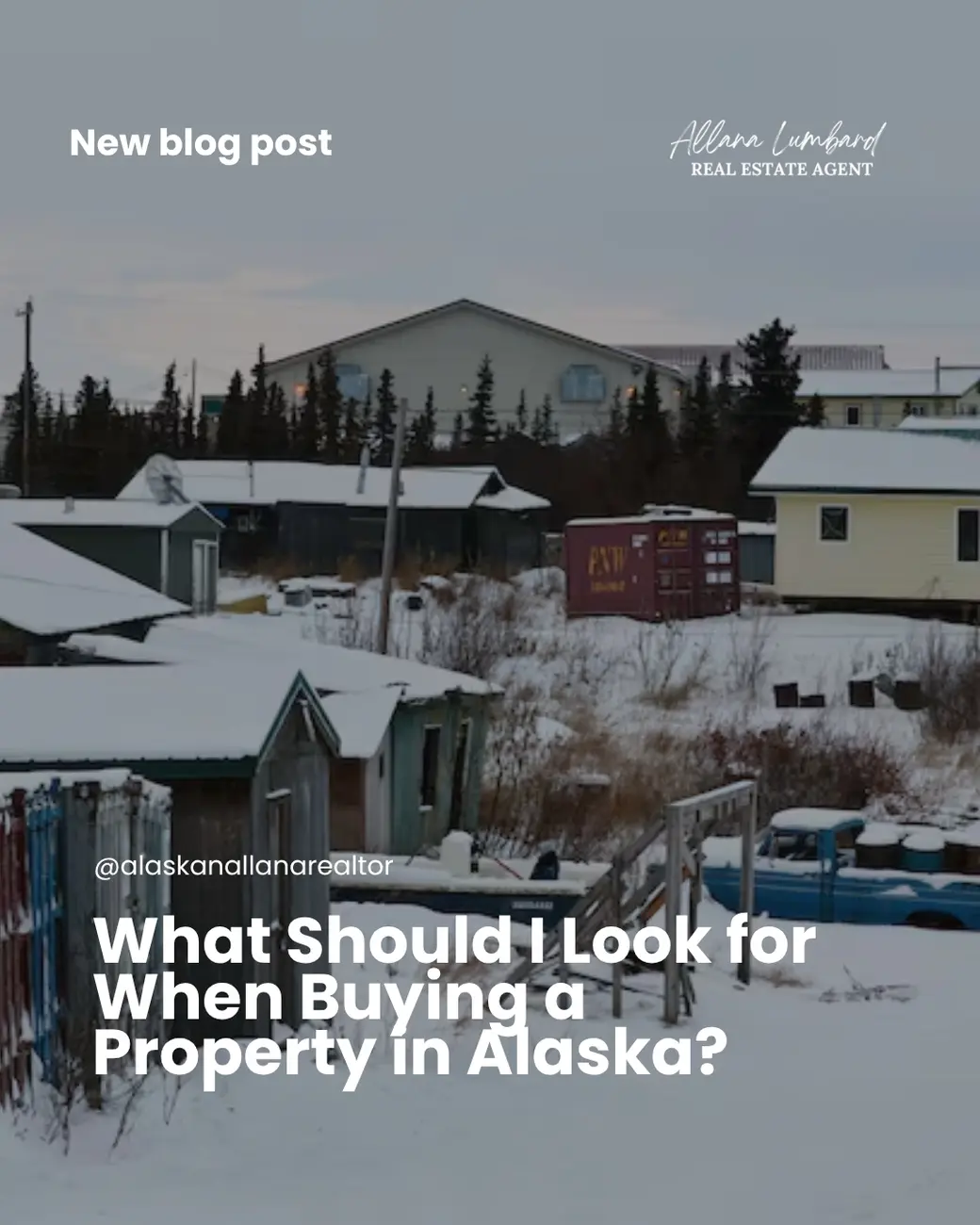
When buying rural property in Alaska, look beyond acreage. Check legal access, well and septic systems, utilities, heating, zoning, easements, insurance, taxes, financing, and how much of the land is actually usable.
What Should I Look for When Buying a Rural Property in Alaska?
Buying a rural property in Alaska can give you something that is increasingly difficult to find in more developed areas: space.
You may find a home with several acres, room for a garden, outbuildings, recreational space, livestock, or even a more self-sufficient lifestyle.
But there is an important distinction between buying more land and buying a property that actually works for the way you want to live.
A rural home with 10 or 20 acres can look like an incredible opportunity until you discover that the property has an aging septic system, an uncertain well, a private road with expensive winter maintenance, limited internet, or wetlands that restrict where you can build.
If you are looking at rural Alaska real estate, especially in Southcentral Alaska, your due diligence needs to go beyond the house itself.
Start With the Land, But Don't Stop There
When you look at Alaska homes for sale with acreage, it is easy to focus on the number of acres.
Instead, ask:
How much of this property can I realistically use?
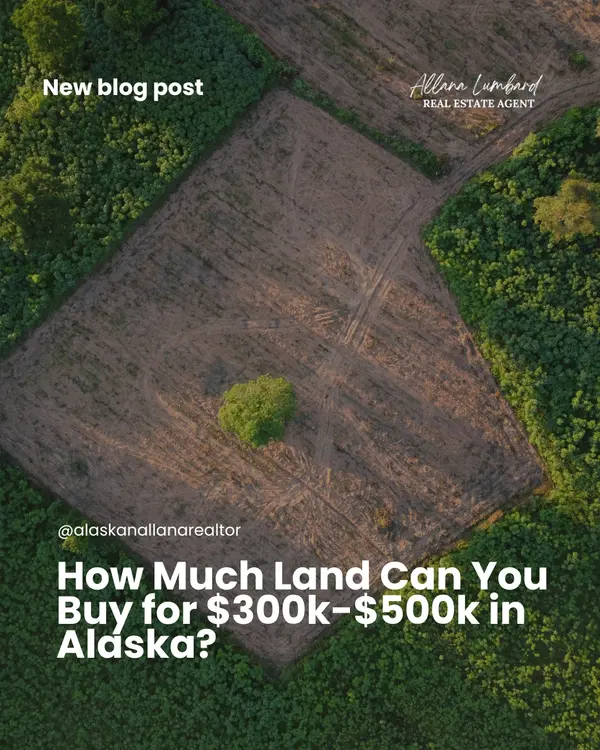
A 20-acre property may include wetlands, steep terrain, poor drainage, flood-prone areas, easements, heavily wooded sections, or land that is otherwise difficult to develop.
A smaller property with good access, a reliable well, functioning septic, usable terrain, and established utilities may ultimately be more practical than a much larger parcel.
This is particularly important if you are buying property for:
- Gardening
- Livestock
- Horses
- A greenhouse
- A workshop
- Additional structures
- Recreation
- Homesteading
- Future development
- Simply having more privacy and outdoor space
Before you fall in love with the acreage, determine what the land can actually support.
1. Verify Legal Access to the Property
One of the biggest mistakes you can make when buying rural property in Alaska is assuming that a driveway automatically means you have legal access.
It does not.
A rural property may be accessed by:
- A public road
- A private road
- A shared driveway
- An access easement
- A recorded right-of-way
- A combination of these
You should review the title, plat, and recorded easements to determine exactly how you legally reach the property.
Ask:
- Is the road public or private?
- Is the access legally recorded?
- How wide is the easement?
- Who maintains the road?
- Who pays for repairs?
- Who handles snow removal?
- Is there a road-maintenance agreement?
- Can emergency vehicles reach the property?
- Does the legal access actually extend all the way to the property?
Physical access and legal access are two different things.
That distinction matters for your daily life, insurance, resale, and potentially your financing.
If you are comparing rural properties in the Mat-Su Valley, this should be one of the first things you investigate.
2. Understand the Well Before You Buy
Many rural properties depend on private wells rather than municipal water.
That means you become responsible for understanding and maintaining the water system.
Alaska's Department of Environmental Conservation recommends that private well owners test their water at least annually for nitrate and coliform bacteria. Additional testing, including arsenic testing, may be appropriate in certain areas.
Before buying, request:
- The well log
- Drilling date
- Total well depth
- Static water level
- Pump information
- Pump or yield-test information
- Recent water-quality results
- Maintenance records
- Water-treatment information
- Water-right documentation when applicable
Do not only ask whether the water is "good."
You need to consider both water quality and water quantity.
A well can produce plenty of water while having a water-quality concern. Another well may have acceptable water quality but insufficient yield for the household.
If the property has a shared well, review the written agreement carefully.
You should know who owns the well, who pays for electricity and repairs, who has access, and how major replacement costs are divided.
What Should I Look for When Buying a Rural Property in Alaska?
When buying rural property in Alaska, look beyond acreage. Check legal access, well and septic systems, utilities, heating, zoning, easements, insurance, taxes, financing, and how much of the land is actually usable.
What Should I Look for When Buying a Rural Property in Alaska?
Buying a rural property in Alaska can give you something that is increasingly difficult to find in more developed areas: space.
You may find a home with several acres, room for a garden, outbuildings, recreational space, livestock, or even a more self-sufficient lifestyle.
But there is an important distinction between buying more land and buying a property that actually works for the way you want to live.
A rural home with 10 or 20 acres can look like an incredible opportunity until you discover that the property has an aging septic system, an uncertain well, a private road with expensive winter maintenance, limited internet, or wetlands that restrict where you can build.
If you are looking at rural Alaska real estate, especially in Southcentral Alaska, your due diligence needs to go beyond the house itself.
Start With the Land, But Don't Stop There
When you look at Alaska homes for sale with acreage, it is easy to focus on the number of acres.
Instead, ask:
How much of this property can I realistically use?
A 20-acre property may include wetlands, steep terrain, poor drainage, flood-prone areas, easements, heavily wooded sections, or land that is otherwise difficult to develop.
A smaller property with good access, a reliable well, functioning septic, usable terrain, and established utilities may ultimately be more practical than a much larger parcel.
This is particularly important if you are buying property for:
- Gardening
- Livestock
- Horses
- A greenhouse
- A workshop
- Additional structures
- Recreation
- Homesteading
- Future development
- Simply having more privacy and outdoor space
Before you fall in love with the acreage, determine what the land can actually support.
1. Verify Legal Access to the Property
One of the biggest mistakes you can make when buying rural property in Alaska is assuming that a driveway automatically means you have legal access.
It does not.
A rural property may be accessed by:
- A public road
- A private road
- A shared driveway
- An access easement
- A recorded right-of-way
- A combination of these
You should review the title, plat, and recorded easements to determine exactly how you legally reach the property.
Ask:
- Is the road public or private?
- Is the access legally recorded?
- How wide is the easement?
- Who maintains the road?
- Who pays for repairs?
- Who handles snow removal?
- Is there a road-maintenance agreement?
- Can emergency vehicles reach the property?
- Does the legal access actually extend all the way to the property?
Physical access and legal access are two different things.
That distinction matters for your daily life, insurance, resale, and potentially your financing.
If you are comparing rural properties in the Mat-Su Valley, this should be one of the first things you investigate.
2. Understand the Well Before You Buy
Many rural properties depend on private wells rather than municipal water.
That means you become responsible for understanding and maintaining the water system.
Alaska's Department of Environmental Conservation recommends that private well owners test their water at least annually for nitrate and coliform bacteria. Additional testing, including arsenic testing, may be appropriate in certain areas.
Before buying, request:
- The well log
- Drilling date
- Total well depth
- Static water level
- Pump information
- Pump or yield-test information
- Recent water-quality results
- Maintenance records
- Water-treatment information
- Water-right documentation when applicable
Do not only ask whether the water is "good."
You need to consider both water quality and water quantity.
A well can produce plenty of water while having a water-quality concern. Another well may have acceptable water quality but insufficient yield for the household.
If the property has a shared well, review the written agreement carefully.
You should know who owns the well, who pays for electricity and repairs, who has access, and how major replacement costs are divided.
8. Investigate Wetlands, Flooding, and Buildable Area
More acreage does not necessarily mean more buildable land.
Before purchasing, investigate:
- FEMA flood zones
- Wetlands
- Drainage
- Streams
- Seasonal runoff
- Standing water
- Erosion
- Slope
- Soil conditions
- Driveway requirements
- Septic suitability
Wetlands can be particularly important because federal permitting requirements may apply when development involves placing fill in regulated waters or wetlands.
If you are planning a home, shop, additional dwelling, driveway, or other major improvement, determine where those improvements can realistically go.
9. Consider Insurance Before Making an Offer
Rural property can have insurance considerations that are different from a typical suburban home.
Alaska's Division of Insurance identifies factors such as replacement cost, construction type, fire protection, distance from fire hydrants, claims history, and wood-burning systems as factors that can affect homeowners insurance.
Before committing to a property, ask an insurer:
Can you insure this property, and what will it cost?
Also ask about:
- Wood stoves
- Outbuildings
- Workshops
- Propane tanks
- Fuel tanks
- Wildfire exposure
- Flood coverage
- Emergency-service distance
A property that looks affordable based on the purchase price may have a very different carrying cost once insurance, heating, maintenance, and transportation are included.
10. Understand Property Taxes
Property taxes vary by location and are not determined simply by the purchase price.
In the Mat-Su Borough, the total tax burden can include the areawide rate along with applicable service-area and other local levies.
For FY2026, the Mat-Su Borough's areawide mill rate was 8.485 mills. For FY2027, the adopted areawide rate was reduced to 7.955 mills.
Those figures should not be interpreted as the complete tax rate for every rural Mat-Su property.
When comparing properties, look at the actual tax bill for the specific parcel.
11. Rural Property Financing Can Be Different
A home with acreage is not the same thing as raw land.
An existing rural home may be financeable through conventional financing or programs such as FHA, VA, USDA, or applicable AHFC programs, depending on the property and buyer.
However, unusual property characteristics can affect underwriting.
Ask your lender about:
- Acreage
- Private roads
- Shared driveways
- Wells
- Septic systems
- Off-grid utilities
- Outbuildings
- Manufactured homes
- Property condition
- Raw land
- Appraisal requirements
USDA's Single Family Housing Guaranteed Loan Program does not set a specific acreage limit, but the property still needs to meet the program's eligibility requirements.
For Alaska buyers, AHFC also offers rural-related financing programs, with eligibility based on the specific program and property.
The important lesson is simple: Talk to the lender before assuming a rural property qualifies for the loan you want.
What Can You Get for Your Money in Southcentral Alaska?
Current 2026 market data shows why rural Alaska real estate cannot be evaluated by acreage alone.
| Community | Recent Market Indicator | Median Sale Price |
|---|---|---|
| Wasilla | Redfin, Aug. 2026 | $436,971 |
| Palmer | Redfin, Aug. 2026 | $411,228 |
| Big Lake | Redfin, 3 months ending July 2026 | $376,811 |
| Houston | Redfin, 3 months ending Aug. 2026 | $381,747 |
| Talkeetna | Redfin, 3 months ending Aug. 2026 | ~$415,000 |
These figures represent different periods and methodologies, particularly in smaller markets, so they should not be treated as direct apples-to-apples comparisons.
Current listings also demonstrate how different properties can be at similar price points.
For example, a current Wasilla listing around $249,000 offered a 3-bedroom home with more than 3,000 square feet, while a Talkeetna property around $265,000 offered a 3-bedroom home with about 1,215 square feet.
At higher price points, current Big Lake examples included properties with approximately 5 acres around $515,000 and nearly 5 acres around $540,000.
Meanwhile, larger acreage can also be found at substantially different price points. Current listings included a Big Lake property with approximately 11.76 acres around $650,000 and Palmer land listings with more than 40 acres.
The takeaway is not that one community is "better."
It is that price, acreage, home size, improvements, access, utilities, and location all interact.
Rural Property Red Flags to Watch For
Before buying, slow down if you encounter:
Access red flags
- No documented legal access
- Unclear easements
- No road-maintenance agreement
- Difficult winter access
- Unclear snow removal responsibilities
Water red flags
- No well records
- No recent water testing
- Unknown well yield
- Shared well with no written agreement
Septic red flags
- Missing documentation
- Unknown drainfield location
- Repeated septic problems
- Surfacing wastewater
- Unpermitted additions
Land red flags
- Wetlands
- Flood concerns
- Poor drainage
- Steep terrain
- Limited buildable area
- Unclear boundaries
Financial red flags
- Unexpectedly high property taxes
- Insurance availability problems
- High heating costs
- Financing restrictions
- Raw land being marketed as though it were a developed homesite
None of these automatically means you should walk away.
They mean you should investigate before you commit.
Your Rural Alaska Property Due-Diligence Checklist
Before closing, make sure you have investigated:
Property
- Legal description
- Survey or plat
- Property boundaries
- Title
- Easements
- Restrictions
- Zoning
Access
- Legal road access
- Private-road responsibilities
- Winter maintenance
- Snow removal
- Emergency access
Water
- Well log
- Well depth
- Pump information
- Yield
- Water testing
- Maintenance records
- Water rights, when applicable
Septic
- DEC records
- System documentation
- Tank location
- Drainfield location
- Pumping history
- Professional evaluation
Utilities
- Electricity
- Heating system
- Fuel tanks
- Generator
- Internet
- Cell service
Land
- Flood zone
- Wetlands
- Drainage
- Slope
- Soil
- Buildable area
- Future development potential
Financial
- Property taxes
- Insurance quote
- Heating costs
- Road costs
- Snow removal
- Maintenance
- Financing approval
Is Rural Alaska Property Worth It?
For the right buyer, rural property can provide something difficult to replicate in a more developed neighborhood: space, privacy, flexibility, and the opportunity to build a lifestyle around the land.
But the right question is not:
"How many acres am I getting?"
It is:
"Can I legally access it, get reliable water, manage the septic system, heat the home, insure and finance the property, use the land the way I intend, and comfortably maintain it through an Alaska winter?"
That is the difference between buying more land and buying a property that actually works for you.
If you are comparing Wasilla real estate, Palmer Alaska real estate, Big Lake Alaska real estate, Houston Alaska homes for sale, or Talkeetna real estate, an experienced Alaska real estate agent can help you identify the questions that need to be answered before you make an offer.
And if you're still deciding whether rural living or a more developed community is right for you, compare the lifestyle, services, commute, property types, and costs before choosing based on acreage alone.
Frequently Asked Questions
What should I check first when buying rural property in Alaska?
Start with legal access, water, septic, zoning, title, utilities, insurance, and the property's usable land. These factors can affect whether the property is practical, financeable, insurable, and suitable for your intended use.
Is buying acreage in Alaska cheaper than buying a home in town?
Not necessarily. Rural properties can offer more land for the money, but wells, septic systems, private roads, heating, snow removal, maintenance, and longer travel distances can add significant ownership costs.
Can I build a homestead on rural Alaska property?
You can use privately owned property for many rural-living activities, depending on the parcel and applicable rules. However, Alaska does not currently have a government homesteading program. Verify zoning, access, water, septic, building, and environmental requirements for the specific property.
Are rural Alaska properties harder to finance?
They can be more complicated depending on the property's access, utilities, condition, acreage, septic, well, outbuildings, or off-grid systems. Your lender should confirm eligibility before you rely on a particular financing program.
What is the biggest mistake buyers make with rural property?
Focusing on the acreage instead of the entire property system. A property with fewer acres but reliable access, water, septic, utilities, heating, and usable land may be more practical than a much larger parcel with significant limitations.
Ready to Explore Rural Alaska Real Estate?
Buying rural property can be an exciting opportunity, but the best purchase is one that fits both your lifestyle and your long-term budget.
Before you make an offer, look beyond the listing photos and acreage. Investigate the land, infrastructure, legal access, utilities, zoning, financing, and ongoing costs.
If you're considering rural property in Southcentral Alaska or the Mat-Su Valley, Allana Lumbard can help you evaluate the property from a buyer's perspective and connect you with the professionals needed for property-specific due diligence.
Allana Lumbard | Real Estate Agent | Real Broker
Homes with Allana
Market statistics, regulations, and property-specific information can change. Buyers should independently verify current requirements, property records, financing eligibility, insurance availability, and other due-diligence items before making a real estate decision.
Recent Posts