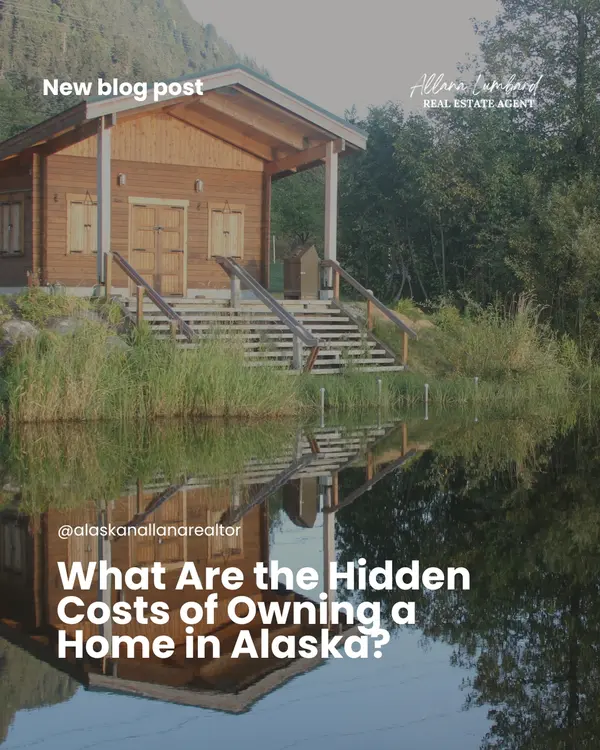
Buying a Home in Alaska: Costs, Neighborhoods & What to Expect

Buying a home in Alaska can be an exciting opportunity, whether you're purchasing your first home, relocating to the state, looking for more space, or planning your next chapter. But buying here can also come with considerations that are different from what you might encounter in other parts of the country.
What Should You Know Before
Buying a Home in Alaska?
Buying a home in Alaska can be an exciting opportunity, whether you're purchasing your first home, relocating to the state, looking for more space, or planning your next chapter. But buying here can also come with considerations that are different from what you might encounter in other parts of the country.
Where you choose to live can have a major impact on your home-buying experience. Anchorage offers a larger urban environment, while communities such as Palmer and Wasilla provide a different pace of life and access to the broader Mat-Su Valley. Other Alaska communities can offer even more space, privacy, or proximity to outdoor recreation.
Your budget also needs to account for more than the purchase price. Mortgage payments, property taxes, insurance, utilities, heating, maintenance, and other ownership expenses can all affect what home is comfortable for you financially.
This guide walks through the major costs, neighborhood considerations, and steps you can expect when buying a home in Alaska so you can approach the process with a clearer understanding of what to consider.
Buying a home is about more than finding the right house. The community, ongoing costs, property condition, and lifestyle all matter when deciding whether a home is the right fit.
What Is the Alaska Housing Market
Like for Buyers?
Alaska isn't one single housing market. Prices, inventory, property types, and buyer competition can vary significantly from one community to another.
A home in Anchorage can have a very different price and property profile from a home in Palmer, Wasilla, or a more rural Alaska community. Even within the same city, neighborhood, property condition, lot size, and proximity to services can make a substantial difference.
That's why buyers should avoid assuming that a statewide average tells the entire story. Your search should focus on the specific communities and neighborhoods that fit your lifestyle, commute, budget, and priorities.
Working with a local real estate professional can help you understand current inventory, recent comparable sales, neighborhood differences, and the types of properties available within your price range.
Think locally when evaluating Alaska real estate. The community and neighborhood you choose can be just as important as the overall state housing market.
The Main Costs of
Buying a Home
The purchase price is usually the biggest number buyers focus on, but it isn't the only expense involved in buying a home. Understanding the complete financial picture can help you determine how much home you can comfortably afford.
Depending on your situation, you may need to plan for a down payment, closing costs, inspections, appraisal expenses, lender fees, prepaid taxes and insurance, moving costs, and other transaction-related expenses.
Once you own the property, you'll also have ongoing expenses such as your mortgage payment, property taxes, homeowners insurance, utilities, heating, routine maintenance, and unexpected repairs.
These costs can vary considerably depending on the home and location. A larger property may offer more space but require more heating and maintenance, while a smaller or newer property may have different ongoing expenses.
Affordability isn't just about the mortgage payment. Look at the full cost of purchasing and owning the home before deciding what fits your budget.
Down Payment &
Closing Costs
Your down payment is the portion of the purchase price you pay upfront rather than financing through a mortgage. The amount required can vary depending on the loan program, lender requirements, and your individual circumstances.
Buyers should also prepare for closing costs. These may include lender charges, title-related expenses, prepaid items, recording fees, and other costs associated with completing the transaction.
The exact amount you'll need at closing depends on the property, loan, purchase price, and contract terms. Your lender can provide an estimate of your expected cash to close, while your real estate professional can help you understand the transaction timeline and contract-related expenses.
Plan for more than the down payment. Knowing your estimated cash to close before you start making offers can help you shop within a realistic budget.
What Will Your Monthly
Home Expenses Look Like?
After closing, your housing costs will continue. For many homeowners, the largest monthly expense is the mortgage payment, but other costs should be included in your budget as well.
Property taxes, homeowners insurance, utilities, heating, maintenance, and potential homeowners association dues can all affect the total cost of living in a particular property.
When comparing homes, look beyond the listing price and estimated mortgage payment. A property with a lower purchase price isn't necessarily less expensive to own if it has higher heating costs, significant maintenance needs, or other ongoing expenses.
Build your budget around the total cost of ownership. Understanding the ongoing expenses can help you choose a home that remains comfortable financially after closing.
Don't Forget About
Property Taxes
Property taxes are an important part of the cost of owning a home in Alaska. The amount you pay can vary depending on where the property is located, its assessed value, and the applicable local tax rates.
Two homes with similar purchase prices can have different property tax expenses depending on their location and assessment. That's why buyers should look at the property's current tax information rather than estimating taxes based only on the purchase price.
When evaluating a home, ask your real estate professional or local municipality for current property tax information. Your lender can also help you understand how estimated property taxes may affect your monthly housing payment.
Property taxes are part of the long-term cost of ownership. Include them in your budget when comparing homes and communities.
Homeowners Insurance
Can Vary by Property
Homeowners insurance is another expense buyers should consider before purchasing. The cost of coverage can depend on factors such as the property's location, age, construction, replacement value, deductible, and coverage options.
Alaska homeowners may also want to discuss specific coverage considerations with an insurance professional based on the property and its location. A home in a rural area may have different insurance considerations than a property in a more developed neighborhood.
Before closing, make sure you understand what your policy covers, what it excludes, and what deductible you'll be responsible for if you need to file a claim.
Get an insurance estimate early. Knowing the expected cost of coverage can help you avoid surprises after you've already committed to a property.
Heating & Energy Costs
Matter in Alaska
Heating is one of the most important operating costs to consider when buying a home in Alaska. The home's size, insulation, windows, heating system, energy efficiency, and fuel source can all influence how much it costs to keep the property comfortable throughout the year.
When viewing a home, ask about the primary heating system and how it has been maintained. It can also be helpful to review available utility information or past heating expenses when possible.
Don't assume that two homes with similar purchase prices will have similar monthly operating costs. A larger or less energy-efficient property may require significantly more energy to heat.
Look beyond the purchase price. Understanding a home's heating and energy needs can help you estimate the real cost of living there.
Plan for Maintenance
& Seasonal Expenses
Every home requires maintenance, but Alaska's climate can make seasonal upkeep particularly important. Depending on the property, homeowners may need to budget for snow removal, roof maintenance, heating system servicing, exterior upkeep, and other seasonal tasks.
The home's age and condition can also make a significant difference. A newer home may have fewer immediate repair needs, while an older property may require more attention to major systems and components.
If you're considering a larger property or acreage, remember that additional space can also mean additional maintenance. Driveways, yards, outbuildings, fences, and other features may require ongoing time and expense.
Maintenance is part of the ownership equation. Think about not only what you can afford to buy, but also what you can comfortably maintain.
Alaska-Specific Property Costs
to Consider
Some Alaska properties come with additional systems or responsibilities that buyers should understand before purchasing. Rural and acreage properties, in particular, may have private wells, septic systems, fuel storage, private roads, or other infrastructure that requires ongoing maintenance.
These features aren't necessarily drawbacks. They can be part of what makes a property appealing. But buyers should understand how each system works, how it has been maintained, and what it may cost to repair or replace in the future.
It's also important to consider the property's location and accessibility. A home farther from major services may provide more space and privacy, but transportation, winter access, and maintenance responsibilities may be different.
Ask how the property works, not just how it looks. Understanding the home's systems and location can help you make a more informed purchase.
The True Cost of a Home
Goes Beyond the Purchase Price
When comparing homes, it's easy to focus on the list price. But the better question is how much the property will cost you to own over time.
A home with a lower purchase price may have higher maintenance or heating expenses. A more expensive property may have lower ongoing costs because of newer construction or greater energy efficiency. Location can also influence taxes, insurance, commuting expenses, and access to services.
Before making an offer, consider the complete financial picture. Understanding both the upfront and ongoing costs can help you choose a home that fits your lifestyle without putting unnecessary pressure on your budget.
The right home is one you can comfortably own—not simply one you can afford to purchase.
Where Should You
Live in Alaska?
Choosing the right community is one of the biggest decisions you'll make when buying a home in Alaska. The best location for you will depend on your work, family, lifestyle, budget, and how much access you want to urban amenities versus open space and outdoor recreation.
Alaska offers a wide variety of communities, from larger urban areas to smaller towns and rural locations. Before focusing on a specific property, think about how far you're willing to commute, which services you need nearby, and what kind of environment you want to come home to.
For many buyers in Southcentral Alaska, Anchorage, Palmer, and Wasilla are popular places to begin the search because each offers a different combination of housing, amenities, space, and lifestyle.
Start with the community, then find the home. A beautiful house won't feel like the right home if the location doesn't work for your everyday life.
Anchorage: Urban Convenience
in an Alaska Setting
Anchorage is Alaska's largest city and can appeal to buyers who want access to a broader range of employment opportunities, healthcare, shopping, restaurants, entertainment, and other urban amenities.
Buyers who work in Anchorage or want to minimize their daily commute may find the city particularly convenient. There are also a variety of neighborhoods and property types, allowing buyers to choose between different combinations of location, home size, lot size, and amenities.
The tradeoff is that buyers may find different levels of competition and pricing depending on the neighborhood. A property closer to major services or in a highly desirable area may offer less space for the same budget than a home farther from the city center.
Anchorage may be a strong fit if convenience is a top priority. Buyers can enjoy city amenities while still having access to Alaska's outdoor environment.
Palmer: Space, Community
& Outdoor Living
Palmer offers a different pace of life from Anchorage and can appeal to buyers who want a smaller-community atmosphere with access to the surrounding Mat-Su Valley.
Buyers may be drawn to Palmer for its open surroundings, agricultural character, outdoor recreation, and community-oriented feel. Depending on the location and budget, properties may also offer more outdoor space than buyers would expect in a larger urban environment.
Palmer can be a good option for families, outdoor enthusiasts, retirees, remote workers, and buyers who prefer a quieter setting. However, buyers who work in Anchorage should carefully consider the commute and how it fits into their daily routine.
Palmer may be ideal for buyers who want a balance between community and open space. It offers a different lifestyle while remaining connected to the broader Mat-Su Valley.
Wasilla: More Space
with Everyday Convenience
Wasilla is another major community in the Mat-Su Valley and may appeal to buyers looking for more space while still having convenient access to shopping, restaurants, schools, services, and other everyday needs.
Buyers may find a range of property types and lot sizes throughout the area. Depending on your budget and priorities, you may be able to explore homes with larger yards, additional storage, workshops, or other features that are important to your lifestyle.
Wasilla can also be attractive to buyers who work in the Anchorage area but prefer to live outside the city. As with any longer commute, buyers should consider travel time, transportation costs, and seasonal driving conditions before making a decision.
Wasilla can be a good fit for buyers who value space and convenience. It offers access to many everyday services while providing a different living environment from Anchorage.
The Mat-Su Valley:
More Options to Explore
The Mat-Su Valley extends beyond Palmer and Wasilla, giving buyers additional communities and property types to consider. For buyers who want more land, privacy, or a quieter setting, expanding the search throughout the valley may open up possibilities that aren't available in more densely developed areas.
However, greater distance from major population centers can also mean longer drives to employment, healthcare, shopping, and other services. Buyers should consider how much time they are comfortable spending on the road and what services they need access to regularly.
For buyers who prioritize outdoor space and privacy, the tradeoff may be worthwhile. The important thing is to understand both the benefits and responsibilities that come with the location.
Expanding your search can create more possibilities. Just make sure the additional space or privacy is worth the extra travel and maintenance responsibilities for your lifestyle.
Other Alaska Communities
Worth Considering
Alaska has many communities beyond Anchorage and the Mat-Su Valley, and each can offer a very different home-buying experience. Buyers may consider locations based on employment, family connections, recreation, cost of living, community size, or other personal priorities.
Some buyers may prefer a coastal community, while others may want a smaller inland town or a location closer to specific outdoor activities. Housing availability and property types can vary substantially from one community to another.
If you're relocating from outside Alaska, spending time in the communities you're considering can be especially helpful. Experiencing the area firsthand can give you a better sense of commute times, amenities, weather, neighborhoods, and everyday life.
There is no single "best" place to live in Alaska. The best community is the one that aligns with your work, budget, lifestyle, and long-term plans.
How Location Changes
Your Home-Buying Experience
The community you choose can affect much more than the home's purchase price. Location can influence your commute, property taxes, insurance, utilities, maintenance responsibilities, access to healthcare and shopping, and the amount of outdoor space available.
It can also affect your daily routine. A larger home farther from the city may give you more privacy and outdoor space, but a smaller home closer to work may save you hours of commuting each week.
Before making an offer, think about what you want your everyday life to look like. Your ideal location should support that lifestyle both now and in the future.
Choose the lifestyle first, then choose the property. The right neighborhood can make a significant difference in how much you enjoy your home long after closing.
What to Expect When
Buying an Alaska Home
Once you've decided where you want to live and what you can comfortably afford, the next step is navigating the home-buying process. While every transaction is different, most buyers can expect several key stages from the initial search through closing.
Understanding the process ahead of time can make the experience feel much more manageable. It also gives you a better idea of what decisions you'll need to make along the way.
Preparation can make the process easier. The more you understand before you start touring homes, the more confidently you can make decisions when the right property comes along.
Find a Local Real Estate
Professional
A local real estate professional can help you understand the market, identify properties that fit your criteria, coordinate showings, review comparable sales, and navigate the offer and contract process.
Local knowledge can be especially valuable in Alaska because communities, neighborhoods, property types, and infrastructure can vary considerably. A professional familiar with the area can help you identify questions you may not think to ask on your own.
When choosing an agent, consider their experience, communication style, knowledge of the communities you're interested in, and familiarity with the type of property you're hoping to purchase.
Choose an agent who understands your goals. The right professional should help you understand your options rather than simply push you toward a purchase.
Get Your Financing
in Place
If you're financing your purchase, getting pre-approved can help you understand your price range before you begin making offers. Your lender can review your financial information and provide an estimate of the loan amount you may qualify for.
Pre-approval can also help you move more efficiently when you find a home you want to purchase. Instead of beginning the financing process after finding a property, you'll already have a better understanding of your position.
Remember that pre-approval doesn't mean you should automatically spend the maximum amount you're approved to borrow. Your personal budget should also account for taxes, insurance, utilities, maintenance, and other expenses.
Buy based on what you can comfortably afford, not simply what a lender says you can borrow.
Tour Homes and
Compare Your Options
Once you know your budget and preferred locations, you can begin touring homes. Try to evaluate each property based on your priorities rather than getting distracted by staging, finishes, or cosmetic details.
Look at the home's condition, layout, storage, heating system, lot, neighborhood, and proximity to the places you visit regularly. If you're considering an older or rural property, pay particular attention to major systems and infrastructure.
It can also help to visit neighborhoods at different times of day. A property may feel very different during a weekday commute, evening, or weekend.
Look beyond the photos. The home needs to work for your everyday life, not just look good during a showing.
Make an Offer
That Fits the Market
Once you've found a property you want to purchase, your agent can help you review recent comparable sales, current competition, the home's condition, and other factors that may influence your offer.
The offer includes more than the purchase price. Depending on the transaction, you may also need to consider financing, inspection, appraisal, earnest money, closing date, contingencies, and other contract terms.
The goal is to create an offer that is competitive while still protecting your interests and fitting your financial plan.
A good offer balances price and terms. Don't focus so heavily on winning the property that you overlook whether the contract works for you.
Complete the Inspection
& Due Diligence
After an offer is accepted, buyers typically have an opportunity to investigate the property according to the terms of their contract. A home inspection can help identify potential issues with the property's structure, systems, and condition.
For Alaska properties, buyers may also need to pay particular attention to heating systems, roofs, insulation, wells, septic systems, fuel storage, private roads, outbuildings, and other property-specific features.
The purpose of due diligence isn't to find a perfect home. It's to understand what you're buying so you can make an informed decision about moving forward.
Use the inspection period wisely. Ask questions, review available documentation, and investigate concerns before your applicable contractual deadlines expire.
Complete the Appraisal
and Loan Process
If you're financing the purchase, your lender may require an appraisal to help determine the property's value. The appraisal is separate from the home inspection and serves a different purpose.
Your lender will also continue processing your mortgage, which may involve additional documentation, verification, underwriting, and other requirements.
Responding promptly to your lender's requests can help keep the transaction moving toward closing.
Stay organized after your offer is accepted. The purchase isn't finished when the seller accepts your offer. Financing and other closing requirements still need to be completed.
Close on Your
New Alaska Home
Once the necessary inspections, financing, appraisal, title work, and other requirements are completed, you'll move toward closing. Your closing team will provide instructions regarding the documents and funds required to complete the purchase.
Before closing, review the final figures and documents carefully. Make sure the terms and financial details are consistent with your expectations and ask questions about anything you don't understand.
After the transaction is completed and ownership transfers according to the terms of the purchase, you can begin the next chapter in your new home.
Closing is the finish line, but preparation gets you there. Staying responsive and organized throughout the transaction can help prevent unnecessary delays.
Things Alaska Buyers
Should Pay Extra Attention To
Alaska's climate, geography, and property types can create considerations that aren't as common in every other housing market. Depending on where you buy, you may need to think carefully about heating, insulation, snow management, road access, private utilities, and the condition of exterior systems.
Rural and acreage properties can require additional due diligence. Buyers may need to understand well and septic systems, fuel storage, private roads, outbuildings, and other infrastructure before committing to a purchase.
Even when purchasing in a city, it's important to understand the home's heating system, energy efficiency, maintenance history, and overall condition.
Every Alaska property is different. Ask questions specific to the home, the neighborhood, and the infrastructure serving the property before making a long-term commitment.
Who Is Buying a Home in Alaska
a Good Fit For?
Buying a home in Alaska can make sense for many different types of buyers. The right property depends on your budget, lifestyle, work situation, household needs, and long-term goals.
Some buyers are looking for a first home and a place to establish roots. Others want more space, outdoor access, a quieter community, or a property that supports a specific lifestyle.
Understanding what you want from both your home and your community can help you narrow your search and make a more confident decision.
First-Time Buyers Looking for
Homeownership
Alaska can be a good option for first-time buyers who are ready to move from renting into homeownership. Buying a home can provide stability and the opportunity to build equity over time.
First-time buyers should focus on finding a property that fits comfortably within their budget rather than automatically purchasing the most expensive home they qualify for.
Your first home doesn't need to be perfect. Focus on affordability, location, condition, and how well the property fits your current needs.
Families Looking for
More Space
Families may be drawn to Alaska communities where they can find additional bedrooms, larger yards, storage, and outdoor space. Depending on the location, buyers may be able to find properties that provide room for children, pets, hobbies, and future growth.
Families should also consider schools, commute times, healthcare, shopping, recreation, and other services that are part of everyday life.
Think about how your family will use the home. The right property should provide enough space while still fitting comfortably within your overall budget.
Buyers Relocating to Alaska
for a New Lifestyle
People relocating to Alaska may be attracted by career opportunities, family connections, outdoor recreation, or the desire for a different pace of life.
Relocating buyers should take time to understand the differences between Alaska communities before purchasing. A home that looks affordable online may have very different commute, utility, maintenance, and lifestyle considerations depending on its location.
If possible, spend time in the communities you're considering before making a purchase. Exploring neighborhoods firsthand can help you understand what everyday life will actually feel like.
When you're relocating, you're choosing a community as much as a house. Make sure the location fits the lifestyle you want.
Outdoor Enthusiasts Who Want
Adventure Close to Home
Alaska's outdoor environment can be a major reason people choose to live here. Buyers who enjoy hiking, fishing, camping, skiing, hunting, gardening, boating, or other outdoor activities may want a home that supports those interests.
For these buyers, factors such as lot size, storage, garage space, road access, and proximity to recreation may be just as important as the home's interior.
Properties with more land can provide additional opportunities, but they can also require more maintenance and responsibility. Buyers should consider the complete picture before purchasing acreage.
For outdoor enthusiasts, the property around the house matters too. Consider how the location and land support the lifestyle you want to live.
Remote Workers Seeking
More Flexibility
Remote workers may have more flexibility when choosing where to live because their home doesn't need to be located close to a traditional office.
That can allow buyers to consider communities where they may find more space, quieter surroundings, or better access to outdoor recreation. A dedicated home office or flexible room can also be an important part of the home search.
Reliable internet should be a priority. Buyers should verify that the property has the connectivity needed for their work before purchasing.
Remote work can expand your options. If you don't need a daily commute, you may be able to prioritize the community and lifestyle you want.
Buying a Home in Alaska
FAQs
How much money do I need to buy a home in Alaska?
The amount you'll need depends on the purchase price, loan program, down payment, closing costs, and your individual financial circumstances. Buyers should speak with a lender to understand their expected cash requirements.
What are the biggest costs of buying a home in Alaska?
Common costs can include the down payment, closing costs, mortgage payment, property taxes, homeowners insurance, inspections, appraisal expenses, utilities, heating, maintenance, and repairs.
Is Anchorage a good place to buy a home?
Anchorage may be a good fit for buyers who prioritize employment opportunities, healthcare, shopping, restaurants, entertainment, and other urban conveniences. The right choice depends on your lifestyle and housing priorities.
Is Palmer a good place to buy a home?
Palmer may appeal to buyers who want a smaller-community atmosphere, outdoor recreation, open space, and access to the broader Mat-Su Valley.
Is Wasilla a good place to buy a home?
Wasilla may be attractive to buyers who want access to everyday services while looking for more space and a different pace of life from Anchorage.
What should I look for when buying a home in Alaska?
In addition to the home's location, size, and condition, buyers should pay attention to heating systems, insulation, roof condition, utilities, maintenance requirements, and any private systems such as wells or septic systems when applicable.
Find the Alaska Home
That Fits Your Life
Buying a home in Alaska is a major decision, but understanding the costs, communities, and buying process can make the experience much easier to navigate.
Start by determining what you can comfortably afford. Then think about where you want to live, how much space you need, what kind of lifestyle you want, and what ongoing responsibilities you're prepared to take on.
Whether you're considering Anchorage, Palmer, Wasilla, the broader Mat-Su Valley, or another Alaska community, taking the time to understand your options can help you find a home that works for both your current needs and your future plans.
The best Alaska home isn't necessarily the biggest or newest. It's the one that fits your budget, location preferences, lifestyle, and long-term goals.
Information &
Resources
This guide is intended as a general educational resource for people considering buying a home in Alaska. Housing prices, property taxes, insurance costs, inventory, financing conditions, and other housing expenses can vary by location and change over time.
Buyers should verify current property, market, financing, tax, insurance, and community information before making a purchase decision.
Real Estate Information
Can Change Over Time
This article is intended for general informational purposes only and should not be considered financial, legal, tax, mortgage, inspection, or real estate advice.
Every buyer's circumstances are different. Costs, property values, financing requirements, taxes, insurance, and other expenses vary by property and location. Consult qualified professionals regarding your individual situation before purchasing a home.
Ready to Find a Home
That Fits Your Plans?
Whether you're buying your first home, relocating to Alaska, looking for more space, or searching for a community that better fits your lifestyle, having the right information can make the process easier.
If you're ready to explore Alaska real estate, I can help you compare communities, understand your options, and find properties that fit your budget and goals.
Recent Posts